
Carl Hanes: close to home
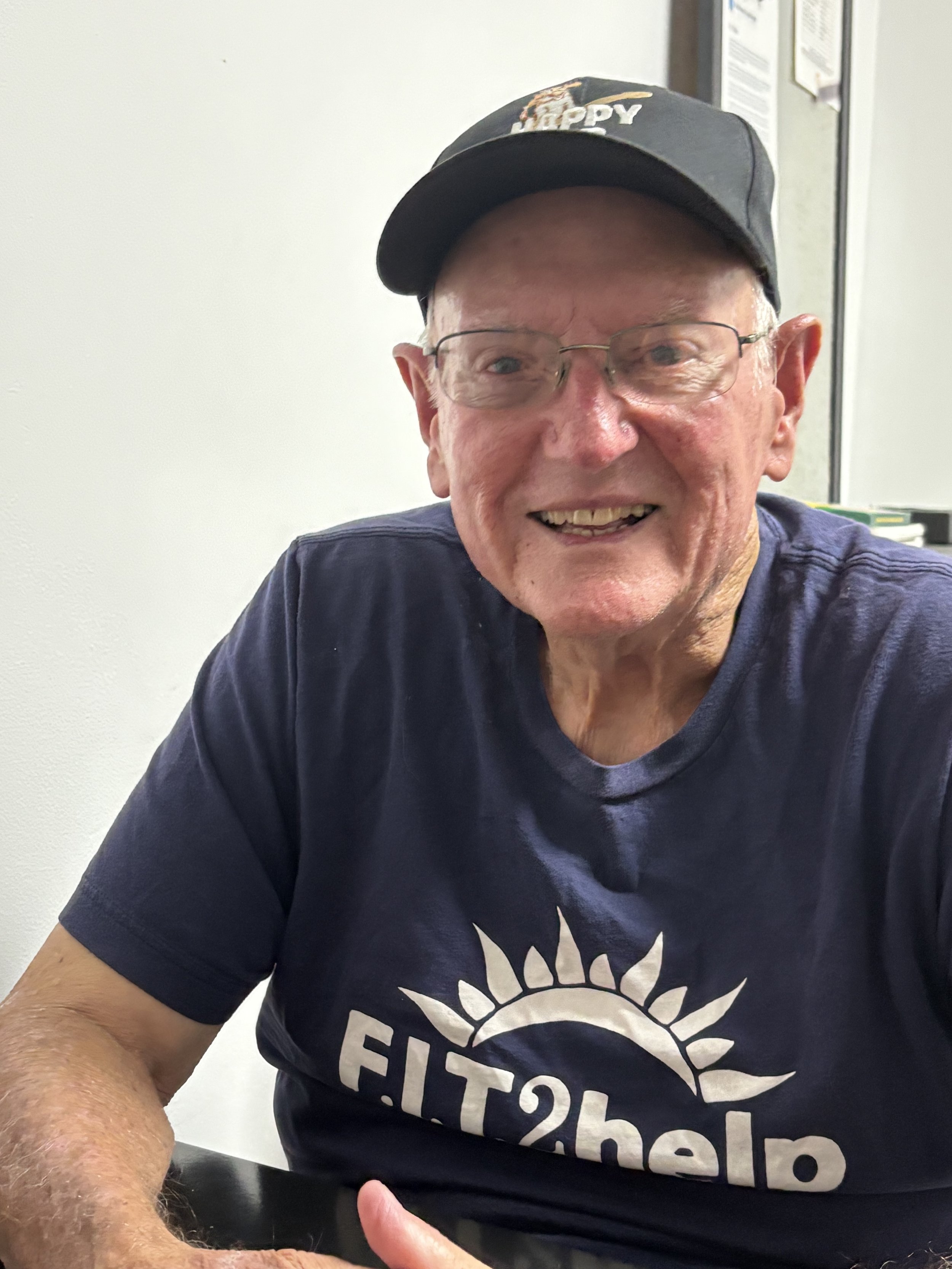
Carl Hanes hasn’t traveled very far to build a life. In fact, for most of it, he hasn’t had to. But he has stories to tell.
He grew up on a Liberty Township farm just an eighth of a mile from his grandparents. When he married Peggy in 1970, he moved into another house on the family farm. Those are the only two houses he has ever called home.
There was, however, that unexpected detour to Germany. Carl was working part time at Hasty Elevator when he received notice to report to Indianapolis for an Army physical.
He went, but “I never came home that day,” he says.
Instead, the Army sent him directly to Fort Knox for basic training. They handed him fatigues and mailed his civilian clothes home.
Eventually, he landed in Germany, about as far removed as he could get from the Liberty Township farm where he had spent his childhood milking cows, gathering eggs and learning to drive a tractor.
But home was waiting. It had been for generations. One of Carl’s distant ancestors, James Scott, was among Liberty Township’s earliest settlers. Carl says Scott first came alone, built a cabin, then returned the following year with his family.
By the time Carl came along, farming was simply part of life. “Is there any other way to live?” he asks.
His grandfather once owned 320 acres and had another 80 before the Depression. Carl’s father had grown up in Kendallville and worked as a carpenter, but during the Depression, when few people were building anything, he came to work for Carl’s maternal grandfather and learned to farm.
Carl learned even earlier. At 7 or 8, he helped his mother milk his grandfather’s three cows in the evenings. His grandfather died when Carl was 10, and not long afterward his father traded the farm’s team of horses for an 8N Ford tractor.
Carl got to drive it, but his mother drew the line at the bigger tractors. Carl couldn’t reach the clutch.
“I started out early,” he says.
By 18, he was driving a semi for Woody Hasty. After graduating from Fairmount High School in 1959, Carl settled into the life he expected to live. Then came the Army.
After two years away, he returned to the farm and picked up where he had left off. The family converted a henhouse into a farrowing house and raised about 2,000 pigs a year. They kept cattle, butchered their own hogs and rendered lard in a large copper kettle.
Then Carl began finding reasons to stop at the Fairmount drugstore. One of those reasons was named Peggy Mitchener. Woody Hasty’s wife had been encouraging Carl to ask Peggy out. She worked at the drugstore, which had a lunch counter frequented by local businessmen.
So Carl started enjoying his noontime meals at that lunch counter in Fairmount. For someone who describes his younger self as “shy and bashful,” it was a start.
The two married in 1970, and they built their life on the farm, remaining there together until Peggy died in 2008. Her death marked another unexpected turn. By then, Carl had also quit farming. The two things that had occupied much of his adult life—Peggy and the farm—were suddenly gone. He needed something else.
Eventually, he found himself back at the horse races his father had taken him to as a boy, and Carl began following the county fair racing circuit and learning who the trainers and drivers were. He particularly liked one trainer and decided that if he ever owned a racehorse, that was the man he wanted training it.
Then one day in 2013, that trainer walked over. “Are you this guy they call Carl?” he asked.
“Well, my name’s Carl,” Carl answered.
“Have you ever thought about buying a racehorse?” the trainer asked.
The conversation eventually led to a $2,200 horse with a chewed-up tail that hadn’t been particularly well cared for. Carl asked the trainer if he could train it. A positive response led Carl to buy the horse. Since then, he figures he has owned 11 or 12 racehorses. Some have done well; others haven’t.
But working with horses wasn’t the only thing Carl discovered. His world was getting larger again. Through attending local sporting events, he grew to know Mackenzie Hall and her mother Pam. When Pam needed help moving equipment into Fit2 Help, a fitness botique in south Marion, Carl offered his cargo trailer. Pam wanted to pay him, but Carl refused. He finally settled for a few months of free membership to her studio instead.
“I took her up on it,” he says, “and I haven’t left.” Neither have the friendships.
Mackenzie began calling Carl her adopted grandfather. Pam’s family invited him to dinners. People he had known only casually became friends. “Most of the people coming here, we’re friends,” he says.
The same is true at the Global Methodist Church southeast of Fairmount where Peggy once attended and where Carl began going before they married. He admits there were years when church wasn’t much of a priority. Now it is. “I feel like I became a good Christian by being there,” he says. Lately, he has been studying the Holy Spirit and discovering there is still plenty to learn.
That seems to be a theme in Carl’s life. For someone whose roots run generations deep in one Indiana township, his life has included a surprising number of new beginnings.
The Army took him away. Farming brought him back. Peggy gave him a family. Her death left an emptiness. Horses gave him something new to anticipate. And along the way, a church, a gym and a collection of people who began as acquaintances became another kind of family.
Carl still describes himself as shy and bashful, which is difficult to believe with his winning smile and the many stories he has to tell.
He also has a way of suggesting that the stories he tells are not necessarily the best ones.
“I left out the interesting parts,” he says, leaving others to wonder what the interesting stories of his life might be.
“Why do you think I left them out?” he asks.
After more than eight decades, Carl is still a Liberty Township guy. Still close to home. And apparently, still keeping a few stories to himself.